Sunday, September 27, 2015

Civil War Knights of the Forked Deer

Click to Enlarge

Posing with a couple of Civil War-era ghosts
at the Appomattox County Courthouse

I recently visited the Appomattox County Courthouse where Confederate army commander Robert E. Lee surrendered to Union commander Ulysses S. Grant.

Fresh in my mind during the visit was an old article posted a few weeks ago on Facebook by Judge Roland Reid of Brownsville, Tennessee. Robert Thomas Chambers (1843 - 1921) originally wrote the article in 1917 and a clipping of it was submitted many decades later to the Brownsville States Graphic by Judge Reid’s grandmother, Jo Williamson Reid (1896 – 1993).

Photo/Roland Reid

Click to Enlarge

Knights of the Forked Deer

What Chambers wrote offers a glimpse into a moment in history when a group of young men gathered with their friends and family at Providence Church in Madison County, Tennessee for their final meal before heading off to fight in the war as part of Alsey High Bradford’s 31st Regiment, Tennessee Infantry, Company F.

Most of those young men never returned home.

Judge Reid and I share several mutual Haywood County ancestors who are mentioned in the article because his grandmother, Jo Williamson Reid was the aunt of my paternal grandfather, Bo Williams (1910 – 2008). 

Photo/Joe Reid

Click to Enlarge

Jo Reid on the steps of Providence Methodist
Church in Madison County, Tennessee

Aunt Jo, as I grew up calling her, and my grandfather’s mother were sisters and she lived across the street from my grandparents for many years. My grandmother and Aunt Jo took me fishing many times when I visited as a child. But, because my grandfather’s mother, Janie Williamson Williams (1887 – 1914), died when he was only four years old, the specific family connection was always a little fuzzy to most of us. 

Click to Enlarge

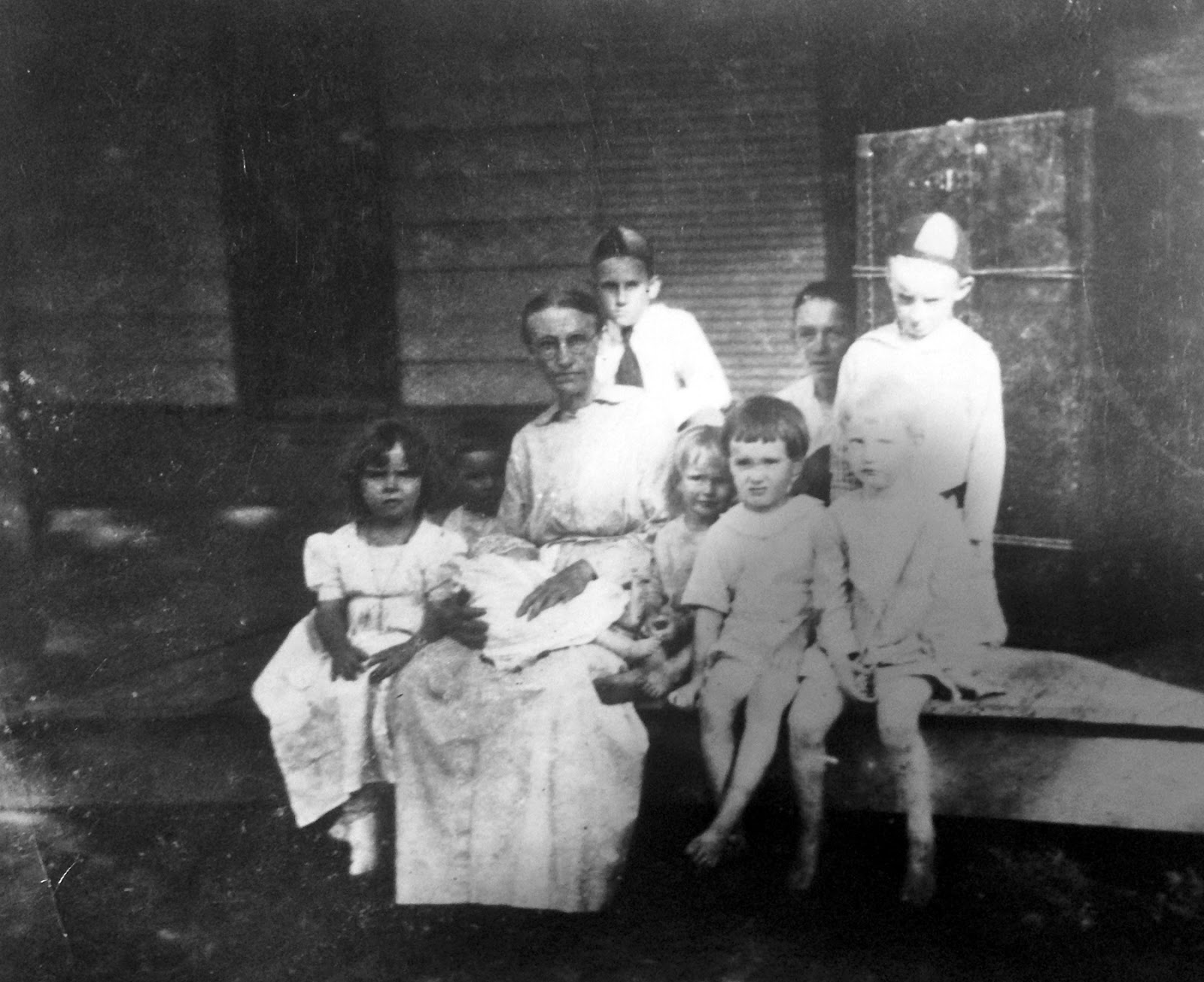
Janie Williamson Williams, upper left
Jo Williamson Reid, lower left

I like to give this great-grandmother a shout-out when I can. Although she didn’t get a chance to enjoy the fruits of a long life, she made an impact. Without her, none of my paternal family would be here.

Janie and Jo's paternal grandfather, Beverly M. Williamson (1813 – 1877), is my third great-grandfather. Williamson donated the land for Providence Methodist Church and cemetery in Madison County. You can find more about that in a blog I posted several years ago.

Photo/Library of Congress

Click to Enlarge

A few of the photos of unidentified Confederate soldiers in the
Liljenquist Family Collection of Civil War Photographs
archived by the Library of Congress

While the names of soldiers are helpful to those of us interested in genealogy, for me the best part of Chambers' article is he pulled back the curtain on a specific moment and provided a little more detail into the Civil War’s impact on his community. Like looking at the faces of the mostly unidentified soldiers in the Liljenquist Family Collection at the Library of Congress, the stories of the young men and women from that era are ultimately what really resonate most with us today.

Chambers wrote:
“After the organization of the company (at Providence Church), a bounteous dinner was served for everybody and it seemed like everybody was there; a very large crowd. In the afternoon we went to Jones Station, a very large crowd accompanying us. Soon the parting hour arrived and it was indeed a sad time—leaving fathers, mothers, sisters and brothers, but perhaps the saddest partings were those of sweethearts.

We went to Trenton that night and the next day, September 20th, we were sworn into the confederate service, where we continued for three and one half years.

Many of those dear boys were left slain on the battlefields, many died of disease and others were maimed for life.

Much could be told of the experiences of this company of Madison and Haywood county boys, but unless it should be called for will probably never be told.

Suffice to say that at the surrender of Gen. Johnston’s army at Greensboro, N.C., April 26, 1965, only the following named members of the company were present, viz:

B.D. Williamson 
B.W. Dougan 
W.J. Shaw 
J.C. Paisley 
W.D. Fletcher 
R.E. Crutchfield 
J.J. Rooks 
J.B. Tassel 
Joe Chambers 
R.T. Chambers
Of this number, as far as I know, this writer is the only survivor.

I have given, probably an imperfect roll of the company but it is nearly correct. I have given from memory as I have no list with me.

Fifty-five years is quite a long time to remember 85 names and I hope to be pardoned if I have failed to give the name of any member of the old “Knights of the Forked Deer.”

R.T. Chambers
Dyer, Tenn.
March 6, 1917

Chambers also listed the names of everyone he could remember who had been part of the formation of Company F and I quickly spotted several of the names from my genealogy research. 

Click to Enlarge

General Braxton Bragg

Their unit was assembled in October 1861 at Camp Trenton in Gibson County, Tennessee. The men trained at Fort Pillow, then moved into Kentucky with General Braxton Bragg. After many of the men and boys had been killed, they were consolidated with the 33rd Regiment.

By spring 1865, those few who survived had been engulfed by injury, illness, starvation and the deaths of their fellow soldiers. 

Many of them were in a desperate state when they heard of the surrender of Robert E. Lee to Ulysses S. Grant in Appomattox, Virginia on April 9, 1865 and then the assassination of Abraham Lincoln just five days later.

Click to Enlarge

William T. Sherman and Joseph E. Johnston

Only a handful of the Madison and Haywood County boys survived to see the final surrender of their regiment to William T. Sherman by Joseph E. Johnston on April 26, 1865 at the home of James Bennett in Durham, North Carolina. 

This was the last major surrender in the Civil War.

The names listed by Chambers in the article, include several that are part of my ancestry line.

Robert Deward “Bob” Williamson (1839 - 1903), who was among those who survived to the end of the war, was the one of the sons of my third great-grandfather, Beverly Williamson. According to "Journey into Yesteryears" by Martha Jones, the Civil War began before Bob Williamson could marry his sweetheart, Callie Stanfield. Williamson and his best friend, William J. “Billy” Shaw, were together that afternoon in 1861 as the train pulled out of Jones Station headed for Trenton.

They fought side by side until Williamson was wounded and fell at his friend’s side with what appeared to be a mortal injury. As he lay dying, Williamson gave Shaw the ring he had in his pocket with a last request that his friend make it home to give the ring to Callie. After the war, Shaw arrived back home to Madison County to discover his friend had actually recovered, made it home and was already married to Callie. In later years, Williamson ran the Madison County post office and a general store.

Click to Enlarge

Headstones of Bob and Callie Williamson in the Providence
Methodist Church Cemetery in Madison County, Tennessee

He and Callie had seven children and both are buried in the Providence Methodist Church Cemetery. 

Private B.W. Dougan was likely Benjamin Dougan (1836 – 1900), a nephew of my third great-grandparents, Beverly Williamson and Elenora Harriett Dougan Williamson. My Dougan line can be traced back to the arrival in the colonies of Thomas Dougan from Donegal, Ireland to Paxtang, Pennsylvania by 1731.

J.J. Overton, W.K. Overton, and C.H. Overton who, from what Chambers wrote, did not survive the war, were likely from the family of my grandfather’s stepmother, Eva Iris Overton Williams.

J.T. Jacocks, listed as 3rd Lieutenant, was the brother of John Hill Jacocks whose family cemetery I explored in Haywood County several years ago. 

Click to Enlarge

Second and third from left, Joe and Sarah Joyner Chambers

Josias “Joe” Chambers (1837 - 1907), another of the survivors, returned to Madison County and married Sarah Joyner, the sister of Mary Elizabeth Joyner Williamson who is my second great-grandmother. In what surely haunted him throughout his life, Chambers’ twin brother, Francis Chambers, was killed in the battle of Perryville, Kentucky on October 8, 1862. 

Photo/Cameron Nabors

Click to Enlarge

Headstone of twins, Josias and Francis Chambers
at Providence Methodist Church Cemetery 

Today, the two brothers are together again, sharing a headstone at the Providence Methodist Church Cemetery. 

Photo/Unknown Chambers relative

Click to Enlarge

Robert Thomas Chambers

Born in Madison County, Robert Thomas Chambers, the author of the article, was 19 years old when he signed up for war. After the war ended, he returned to the area, married three times and fathered fifteen children. He was a Gibson County, Tennessee farmer and also served as mayor of Dyer. 

Chambers died on May 16, 1921 and was buried in Dyer in the Bobbitt Family Cemetery

I know his effort to remember and record his memories of that day back in 1861are very much appreciated by all of us who attempt to record the history of our ancestors.

For more blog entries, visit my Blog Home Page or to check out the genealogy research about my specific family lines, go to my Haywood County Line Genealogy Website. 

Sunday, September 6, 2015

The Brownsville train depot, gone but not forgotten


(Photo from David Duke)

Click to Enlarge

The Brownsville Depot

A photo of the L&N train depot in Brownsville, Tennessee posted by David Duke in the Facebook group “You grew up in Brownsville, Tennessee if…” generated many posts of memories of the old train station and piqued my curiosity about this piece of Haywood County, Tennessee history.

If you check out the posts by those who shared their memories, you’ll see it was more than just a building. From family trips to visit relatives in nearby towns like Milan, Bells, Stanton and Memphis to experiencing a train ride with a Cub Scout pack or school group or just gathering with friends and family to watch the train come into the station, the depot made a real impact on many who can still remember hearing the whistle blow in person.

(Photo by H. E. Clement)

Click to Enlarge

Hand-tinted art by H.E. Clement from postcard of
the Brownsville depot

I discovered the depot has an interesting history.

By 1855, the first twenty-five miles of the Memphis and Ohio Railroad (M&O) had been completed. However, according to Maury Klein in “History of the Louisville & Nashville Railroad,” deciding the location of the tracks was not an easy task.
“Ironically, the Memphis & Ohio faced a rather unique problem for its day: the indifference and outright hostility of citizens living along the route. Standing aloof from the commercial aspirations of the terminal cities, they saw no advantage for themselves in the coming Iron Horse. In 1856 the picture brightened considerably. After another long debate the Memphis & Ohio board decided to locate the road directly to Paris (Tennessee) via Brownsville.” Page 20
The tracks, which would eventually connect Memphis to Louisville, made it to Brownsville in late 1856. Eventually, the Louisville & Nashville Railroad (L&N), which had begun in 1850 in Kentucky as a way of allowing Louisville to become more competitive with Cincinnati, absorbed the M&O.

(Photo by H.E. Clement)

Click to Enlarge

Hand-tinted art by H.E. Clement from postcard of
the Brownsville depot

During the Civil War, both the Union and the Confederacy used the L&N to transport soldiers and provisions. Eventually, the Union Army operated all the key sections of the L&N which contributed to their ultimate victory.

(Photo from Pope's Manual of Railroads of the United States)

Click to Enlarge

Southern tracks of the L&N Railroad in 1901

According to “Heart of the Tennessee Delta,” (for sale at the West Tennessee Delta Heritage Center) construction did not begin on the depot in Brownsville until Sept. 1905 and was completed in five months.

The Brownsville depot remained a hub of activity for more than six decades as the L&N remained a significant source of transportation of freight and passenger trains.


Kathy Mattea, "The L&N Don't Stop Here Anymore"


By the late 1960s, an increase in automobile ownership and affordable airplane travel made the passenger train business much less profitable. In 1968, the last passenger train pulled out of the depot and that part of Brownsville's history came to a close. The L&N didn't stop there anymore, as the song goes. The old depot, which I assume was in horrible shape, was sold to an individual who had it torn down in 1974.

Click to Enlarge

Approximate location of The Brownsville Depot

Although the depot is gone and there is not a single trace it ever existed, there are a few ways you can go back in time and catch a quick glimpse.

Click to Enlarge

Screen captures from
"The Liberation of L.B. Jones"

The opening and closing scenes of "The Liberation of L.B. Jones" were filmed at the depot shortly before it was torn down. The movie was acclaimed director William Wyler’s final movie and was based on the best-selling 1965 novel, “The Liberation of Lord Byron Jones.” The novel was inspired by an actual murder that took place outside Humboldt, Tennessee in 1955.

Click to Enlarge

"All Aboard with Mr. Bee."

According to a comment on the Facebook post, the children’s program “All Aboard with Mr. Be” included b-roll of the Brownsville depot in the opening. The show aired on Memphis’ WKNO Channel 10 in the ‘60s and ‘70s. I actually remember the show but can’t remember the opening and there are no clips online.

Click to Enlarge

Opening scene of "In the Heat of the Night"

Some also believe the opening scene from the original "In The Heat Of The Night" starring Rod Steiger and Sydney Potier were also filmed at the Brownsville depot. The fact that Sydney Potier actually arrives "in the heat of the night" makes it's difficult to tell for sure if this was filmed at the depot, but it certainly could have been. 

Click to Enlarge

Photo of the Brownsville depot on the wall
at Hometown Drugs in Brownsville

As you can read on the Facebook post, the single photo of the depot created an opportunity for many to share memories and stories of times with friends, learning opportunities with Cub Scout and school groups, departing for vacations to other cities and times spent with family who have long passed away.

Just imagine if it had been possible to restore the depot or move it to another location where it could be a part of the community today. I hope we can work together to find ways to make sure other historic sites like this one are preserved for future generations.

For more blog entries, visit my Blog Home Page or to check out the genealogy research about my specific family lines, go to my Haywood County Line Genealogy Website. 

Sunday, August 9, 2015

The life and death of Will Mathis


My brother-in-law, Alan, recently shared with me a document he found in some of his Mississippi grandmother’s belongings. In great shape other than a few torn and folded edges, this first person account of a man named Will Mathis appeared to have been typed more than 100 years ago.

As it turned out, this Mathis guy had quite the story to tell.

According to his statement, he arrived in Lafayette, Mississippi in 1897 and married the daughter of his liquor-distilling boss. He was clearly not an ideal husband and wrote, “I cannot remember the times she has sit by my side and begged with all the love and tender feelings that a wife could have for a husband to quit my wicked ways, she has offered to work in the field, if I would let whisky alone, she never would get mad.”

As I continued reading, it became clear Mathis’s offenses went far beyond his whisky drinking. In 1901, he was involved in the murder of brothers who were federal officers who had come to serve him with a warrant. Sadly, John A. Montgomery and Hugh Montgomery were shot, dismembered, and then burned beyond recognition when Mathis’s home was set on fire in a lame attempt to destroy evidence of the crime.

I turned to Google to see if there were any records online of Will Mathis and I was not disappointed.

The November 21, 1901 issue of the Oxford Eagle reported:
“One of the most horrible double murders that ever occurred in North Mississippi was committed near Delay, a small village 12 miles south east of Oxford, Saturday night, in which two brave and faithful officers were the victims. Special Deputy United States Marshal John. Montgomery of this place, and Hugh Montgomery of Pontotoc, left Oxford about 3 o’clock that afternoon with a warrant for the arrest of Will Mathis, a desperado, for illicit distilling. The arrest was made, and the trio were supposed to have made the arrangements to return to town.

Pistol shots were heard in that direction at frequent intervals during the night. About 4 o’clock Sunday morning Mathis’ house was discovered on fire, but when Messr. Dan Welch and Robuck, reached the scene the house was reduce to ashes, and the charred remains of the brave officers were found.

The news was received here about 9:30 o’clock Sunday morning and the town was thrown into intense excitement and a large posse left at once for the scene of the horrible deed. Coroner Turner at once impaneled a jury and began the taking of testimony.

The scene was appalling. Brave men were moved to tears as they viewed the work of the assassins. The cremated bodies were removed from the dying embers. Mr. John A. Montgomery was identified by a small piece of clothing and a pocketknife and Mr. Hugh Montgomery was identified by a gold tooth.”
Mathis, his father-in-law, and two other men were accused of committing the crime and, although Mathis claimed he was innocent, he and another man were found guilty and hung in Oxford, Mississippi on Sept. 24, 1902. 

Click to Enlarge

Account of the hanging of Will Mathis
and Orlando Lester in the
San Francisco Call on September 25, 1902

Mathis’s father-in-law, Whit Owens, was likely the one who was actually responsible for the murders and subsequent fire although he was eventually acquitted. He was later found guilty of the murder of a witness in another crime and sentenced to life in prison. After serving only 10 years in the Rankin County Prison Farm near Jackson, Mississippi, he was released for "meritorious conduct in preventing the escape of a fellow inmate" and lived with his family until his death in 1928.

Why would Alan’s grandmother have this document in her possession? The whole story became so notorious, reproductions of his account were sold throughout the area as a souvenir.

It’s likely Alan’s grandmother purchased this somewhere in Mississippi as a young girl and saved it all these years.

Even though this 100-year-old document isn’t an original, just like the story, it's as fascinating today as it was back during the turn of the century.

You can read more about this entire case on CrimeScene.com or explore what happened next to the Owens and Mathis families on Genealogy.com.

For more blog entries, visit my Blog Home Page or to check out the genealogy research about my specific family lines, go to my Haywood County Line Genealogy Website. 

Saturday, June 27, 2015

Throwing in my two southern cents on the Confederate flag


My grandparent's farm in Haywood County
in the mid-1990s.

I'm a Southerner and I love all things related to West Tennessee. If you ask me what symbols represent home, my mind immediately goes to family, cotton fields, cicadas on a miserably hot summer afternoon, the blues, the smell of watermelon on my grandparent's back porch and yes, Elvis.

One thing that never really entered my consciousness in a significant way until now is the Confederate flag.


Click to Enlarge

Of course, I've seen it many times, but rather than associate it with my Confederate ancestors, or anything “Southern,” to me it was an element from a cartoon. Like the Roadrunner's Acme sign or giant stick of dynamite, it was just a sign of silliness. I would have most quickly associated it with Granny on the "Beverly Hillbillies," the car in the "Dukes of Hazard" or a stereotypical gang of leather-clad bad guys who are supposed to represent a threat to the good guys in a movie I would probably never have time to watch.

After the senseless massacre in Charleston last Wednesday, the hateful images of the cowardly young man who committed the murders could be held up against the remarkable display of forgiveness by the church members and families of the victims. The flag is no longer funny to me.

I've read a lot about the pre and post-Civil War period in Tennessee and I admit, I am the guy who has a hard time passing a historical marker on either side of the Mason-Dixon line without stopping. Just ask my family.

Obviously, I'm fascinated by my southern heritage; otherwise I wouldn't have a blog and website about genealogy to begin with. And of course, I find the concept of slavery and all the cruelties associated with it to be repugnant, just like everyone else with half a brain.

I feel your pain, Ben Affleck. I too have always been perplexed and embarrassed by my slave-owning ancestors. Despite the old adage "it was a different time," I still would love to know how anyone could have participated in something so horrific.

Click to Enlarge

The Confederate flag debate feels especially relevant to me. In addition to having a blog where I frequently post about my southern ancestors, I spend my days working for an organization that champions the five freedoms of The First Amendment.

About 100 feet from my office is a display (right between Bart Simpson and school prayer) in the Newseum featuring Kentucky high school senior Jacqueline Duty, who sued her high school district when she was bared from her senior prom because she wanted to wear a sequined Confederate flag-inspired dress.

The water cooler talk and hallway chatter this week has included a lot of interesting discussion and dialog around the issue and how it relates to our First Amendment rights.

The Newseum Institute’s David L. Hudson Jr. posted a great article about this week’s Supreme Court showdown in Walker v. Texas Division, Sons of Confederate Veterans, in which the court ruled that Texas could deny requests from a group that wanted to create specialty license plates displaying the Confederate battle flag.

Newseum Institute chief executive officer Gene Policinski wrote that although the Walker decision seems rooted in the court of public opinion, it’s not good news for the First Amendment.

I believe good and evil exist in the world. And now I associate the forgiveness displayed by those in Charleston with good and the Confederate flag with evil. Period.

Click to Enlarge

I believe it's time to take down the flag from public places, pull the statue (and body) of Nathan Bedford Forrest out of the city park and place items that represent the evils of slavery and racism in museums and history books where they can be remembered and discussed but not celebrated.

Full disclosure: Nathan Bedford Forrest was possibly a cousin of my 4th great-grandfather, Samuel Forrest, so at least you don't have to deal with that, Ben Affleck. 

If you choose to display the Confederate flag on your bumper, at your home or wear it on your clothing, that's certainly your right.

However, I won't be swimming in your cement pond, riding in your 1969 Dodge Charger or joining your motorcycle gang, so you'll have to celebrate that part of our heritage without me.

If anyone needs any positive images or symbols of all the things that I think make the South great, just ask me. I can come up with a whole list for you. The first thing on that list would be the mind-blowing forgiveness shown by the members of Emanuel African Methodist Episcopal Church this week.

For more blog entries, visit my Blog Home Page or to check out the genealogy research about my specific family lines, go to my Haywood County Line Genealogy Website. 
The Newseum Institute’s David L. Hudson Jr. provides analysis of this week’s Supreme Court decision in Walker v. Texas Division, Sons of Confederate Veterans, in which the court ruled that Texas could deny requests from a group that wanted to create specialty license plates displaying the Confederate battle flag. Newseum Institute chief executive officer Gene Policinski writes that although the Walker decision seems rooted in the court of public opinion, it’s not good news for the First Amendment. - See more at: http://www.newseum.org/2015/06/24/the-confederate-flag-and-the-first-amendment/#sthash.CFx9RZ69.dpuf
a special section on students’ rights tells the story of Kentucky high school senior Jacqueline Duty, who sued her school district when she was barred from senior prom because of her dress — a sequined representation of the Confederate flag. - See more at: http://www.newseum.org/2015/06/24/the-confederate-flag-and-the-first-amendment/#sthash.CFx9RZ69.dpuf
special section on students’ rights tells the story of Kentucky high school senior Jacqueline Duty, who sued her school district when she was barred from senior prom because of her dress — a sequined representation of the Confederate flag. - See more at: http://www.newseum.org/2015/06/24/the-confederate-flag-and-the-first-amendment/#sthash.CFx9RZ69.dpuf

Saturday, June 6, 2015

Photo of Mary Aurelia Blaydes Castellaw and Jack Pender Castellaw

Photo/Lynn J. Graves

Click to Enlarge

Mary Aurelia Blaydes Castellaw with her grandchildren

Lynn Graves is one of my many Castellaw cousins that descend from my third great-grandparents, Thomas Jefferson "T.J." Castellaw (1808 - 1878) and Mary Elizabeth Cole (1809 - 1875). He recently found this photo of one of his Castellaw ancestors in some of his mother's belongings.

The older lady in the photo, Mary Aurelia Blaydes Castellaw, was born Feb. 22, 1848 in Virginia. 

By Oct. 5, 1865 she was in Haywood County, Tennessee where she married Jeremiah Fletcher Castellaw, one of T.J. and Mary Castelaw's sons. He was one of the brothers of my second great-grandfather, Thomas Jefferson "Tom" Castellaw, Jr.

In 1900, Jeremiah and Mary donated the land west of the Holly Grove Baptist Church in Haywood County, Tennessee to be used as the cemetery. It's still in use today and many of relatives are buried there.

Jeremiah and Mary were the parents of nine children; Lucy Albina "Bina", Egbert O., Thomas Jefferson "Tom," Jack Coleman, Charles, Authur Fletcher, Myrtle, Jelks F. and Jessie Beatrice. 

Immediately to Mary's left in the above photo is Lynn's mother and directly behind her is her grandson, Jack Pender Castellaw, from her son, Jack Coleman Castellaw.

Click to Enlarge

Jack Pender Castellaw

Sadly, Jack Pender Castellaw was one of ten Baylor University basketball players who lost his life in a bus accident in 1927. The players are now referred to as "The Immortal Ten."
On Jan. 22, 1927, coach Ralph Wolf was taking his first Baylor basketball team to play a game in Austin against the University of Texas. 
Rain hampered the vision of the chartered bus driver as debris from the road sprayed the windshield of the bus. In Round Rock, Texas, just miles from the team's arrival in Austin, a speeding train from the I&GA Railroad Company rammed into the side of the bus at a railway crossing near the center of the city. 
Ten of the 21 players, coaches and fans in the Baylor party that traveled on the bus that day were killed. Source
At the first student assembly each fall at Baylor, they still set out empty chairs for each of the Immortal Ten and the university dedicated a large memorial to them in 2007.

Mary Castellaw died on May 30, 1933 in Haywood County. 

You can read much more about Jeremiah and Mary Castellaw and their family in the Castellaw section of my website.

For more blog entries, visit my Blog Home Page or to check out the genealogy research about my specific family lines, go to my Haywood County Line Genealogy Website.  

Monday, May 25, 2015

The Brantley DNA test results are in and the father is...

Random Photo from Pinterest

Thanks to my cousin Betsy’s detective work, we were recently able to take part in a DNA project that confirmed our Brantley lineage goes back to Edward Brantley, an early immigrant to America from England in 1638.

The project, initiated and managed by Ken Brantley, founder of The Brantley Association, tests and catalogs the Y-DNA of Brantley males using Family Tree DNA.

Y-DNA testing examines the DNA in the Y-chromosome. If you paid more attention than I did in science class, you remember that all males have one Y-chromosome in each cell and copies are passed down unchanged from father to son.

Using a Y-DNA test, you can confirm your direct paternal lineage from your father, grandfather, great-grandfather, and so on. By looking at the Y-DNA you can verify whether two individuals are descendants of the same distant paternal ancestor.

Because neither Betsy nor I are "a male with the Brantley surname," as required for this particular DNA test, Betsy tracked down one of our distant relatives who generously agreed to participate in the research on our behalf. Like most of those in the Brantley Y-DNA program, we were able to confirm that we descended from Edward Brantley who was born around 1615 and immigrated to Isle of Wight County around 1638 as an indentured servant for John Seward.

Click to Enlarge

Mention of Edward Brantley
in "Cavaliers and Pioneers"

The first English plantations had been established in the area just 10 years earlier and, by the time Brantley arrived, the new residents in the area had completed St. Luke’s Church, the first church of British North American construction.

They also had just changed the name of their town from Warrosquyoake Shire to Isle of Wight. Today, that area is called Southampton County, Virginia and is only about 180 miles from where I sit typing this.

Edward Brantley, the immigrant, died in Isle of Wight around 1688 after becoming a wealthy planter and father of four children. His son Phillip (abt. 1651 - abt. 1725) had a son named Edward (abt. 1672 - 1737) after his grandfather. According to the research done by Ken Brantley and the Brantley Association, 80% of Caucasians with the last name of Brantley descend from that Edward Brantley.

Click to Enlarge

Early Brantley Migration from Virginia to North Carolina

Three of Edward Brantley's sons, Lewis, Joseph and John, were among the first to make North Carolina their home when they migrated to Edgecombe County (soon after changed to Granville County) in 1745. It appears from the records that Joseph made that his home until his death, but ten years later, brothers Lewis and John continued migrating southwest to Chatham County, North Carolina.

Although the specific paternal connection is not confirmed, we do know for certain a Brantley man in Bertie County, North Carolina fathered an Edward Brantley in 1760.

By this time of the 1790 census, this Edward Brantley was still in Bertie County with a wife and five children. On May 12, 1832, he married his second wife, Clarissa Cole, and then died five years later.

Click to Enlarge

Brantley North Carolina to Tennessee Migration

Only two children were included in Brantley’s will: Augustus Brantley (1811 – 1876) and Margaret Brantley Sorrell. Augustus, my fourth great-grandfather, would leave Bertie County and travel more than 800 miles west to become one of the first settlers of Haywood County, Tennessee in the early 1830s.

By the time of the 1840 census, 28-year-old Augustus was living in Haywood County and in his home were six people. Five were “free white persons” while one was a slave who was a female between the ages of 10 – 23. Augustus was married first to Martha White (1812 - 1852) then to Zilpha King (1823 - 1893).

Click to Enlarge

Some of the heads of families in the 1840 census

Many other heads of families who show up in my genealogy were living around the Brantley family including Bemberry White, William Watridge, Edward Steele, George Thomas (minister at Zion Baptist Church), Dempsy Nowell, and John Dawson Castellaw. It was Castellaw who led many of the wagon trains from Bertie County to Haywood County around 1832. Another neighbor, Robert W. Duckworth, was the grandfather of Confederate Civil War captain Alexander Duckworth.


Click to Enlarge

l to r: Henry Day Brantley, Henry Preston Brantley,
William "Willie" Day Brantley, Virginia Brantley Lovelace

Augustus was the father of Henry Day Brantley (1845 – 1918), who was the father of Henry Preston Brantley (1872 – 1956), who was the father of William "Willie" Day Brantley (1897 – 1969), who was the father of my maternal grandmother, Virginia Brantley Lovelace (1917 – 2007) and Betsy's mother, Betty Brantley Sullivan.

Now that I've seen Y-DNA connect our Brantley line back to Edward Brantley, I next plan to personally participate in a Family Tree DNA Williams Y-DNA study to see if I can get that line back further than George Williams.

For more blog entries, visit my Blog Home Page or to check out the genealogy research about my specific family lines, including the Brantley family, go to my Haywood County Line Genealogy Website. 

Saturday, April 25, 2015

Never-before-seen photos of Hiram Bradford family cemetery

Click to Enlarge

Likely descendants of Hiram Bradford taken at
"The Old Bradford Place," Sept. 1924 

I love it when technology allows complete strangers to work together to solve puzzles relating to individuals who died decades ago.

I recently wrote about the above photo which was likely taken in 1924 at the home of Haywood County's first entrepreneur, Hiram Bradford, long after his death in 1862. I noted in the blog that nothing I could find anywhere online included the exact location of the cemetery in which Bradford and other members of his family were buried.

This week I received a phone call from Jered Olds who had stumbled across what ended up being the Bradford Family Cemetery. Covered in weeds and vines, it has obviously remained well-hidden for many years.

Photo/Jered Olds

Click to Enlarge

Bradford Family Cemetery

Olds and his cousin, Rodney Reynolds, were turkey hunting about four miles west of Brownsville, off Highway 54, when they came across a heavily wooded area concealing a number of headstones. 

Photo/Jered Olds

Click to Enlarge

Headstone of Hiram Bradford

They pulled away the weeds and debris and Olds used his phone to snap a few photos so he could look up the names when he returned home.

Photo/Jered Olds

Click to Enlarge

Headstone of Alsey Bradford

His online search led him to my original blog entry where he learned more about the identity of some of the individuals buried in this long-forgotten family cemetery. 

Photo/Jered Olds

Click to Enlarge

On a genealogy message board, I found an old post from 2001 that listed the individuals thought to be buried here:
Hiram Bradford, b. 2 Jan 1797 - d. 27 Aug. 1862
Alsey Bradford, b. 1855 - d. 1864, son of H.S. and M.J.
Bascom Bradford, b. 1851 - d. 1852 - son of Alsey H. and Mary E.
Emily Allen Bradford, b. 1854 - d. 1855 - dau. of A.H. and M.E. Wilson Bradford
Mary Tillman Bradford, b. 1850 - d. 1852 - dau. of Alsey H. and Mary E.
Millie Bradford, b. 1797 - d. 1867 - wife of Major H. Bradford
Susan J. Bradford, d. 14 Sept. 1852 - wife of Hiram Scott, age 19 years
Willie Bradford, b. 1857 - d. 1861 - son of H.S. and M.J.
Bradford, inf. son of H.S. & M.J., one day old
Bradford, 1859 - 1859 - 1 day old
Unless there any unmarked graves, it appears these members of the Bradford family all died from 1852 to 1867.

In 1852, the first three Bradfords were laid to rest here. Included were one-year-olds Bascom Bradford and Mary Tillman Bradford, both children of Colonel Alsey High Bradford (1822 - 1906) and his wife Mary E. Wilson Bradford. This couple would bury another child here in 1855 when their one-year-old daughter, Emily Allen Bradford, died.

Colonel Bradford, a young farmer when he buried his three small children, later became well known for his Civil War service. In 1861 he was Captain and then Colonel of Company D, 31st Tennessee Regiment

By 1862 he was Chief of Staff to General John Porter McCown and a Commander of Hilliard’s Tennessee Legion. After the war, he returned to Haywood County where he farmed and held city and county leadership positions until his death in 1906. Bradford is buried in Oakwood Cemetery in Brownsville, Tenn. A historic marker on College Street in Brownsville commemorates Colonel Bradford's life.

His younger brother also suffered a great deal of loss reflected here. Hiram Scott Bradford's (1830 - 1873) young wife, Susan J. Bradford, was the third person to die and be buried in the cemetery in 1852. She was only 19 and her headstone is the most ornate.

Bradford then married Mary Jane Stephens (1832 - 1916) and they would bury at least two children here. Sadly, they lost a one-day-old son and then their four-year-old son, Willie, who died in 1861.

Another additional infant buried here was likely the child of either Hiram Scott Bradford or Colonel High Bradford.

The last to be buried in the cemetery was the family matriarch, Emily “Millie” Allen Bradford. The wife of Hiram Bradford, she was born in 1797 in Kentucky and died in 1867 in Brownsville. In addition to the two sons mentioned here, she and Hiram were the parents of Phredonia Bradford Mann (1815 - 1866), Sarah Elizabeth Bradford Young (1831 - 1890) and George Bradford (1836 - 1812).

Click to Enlarge

Tennessee Historic Marker for Bradford's Landing

As it turns out, there is one other place that commemorates the life of Hiram Bradford. At the intersection of U.S. 70 and River Bend Road in Brownsville is a Tennessee Historic Marker that notes Bradford's contribution to the growth of the town. You can check it out the next time you're headed to Brownsville.

I'm very grateful that Jered Olds shared the photos and allowed me to post them here. I'm sure they'll be especially interesting for those researching the Bradford family line or Civil War buffs.

For more blog entries, visit my Blog Home Page or to check out the genealogy research about my specific family lines, go to my Haywood County Line Genealogy Website.